
 Gentrification is a popular topic in American pop culture, but one that’s mainly addressed through cliched caricatures of skinny-jeaned, PBR-swilling hipsters displacing thuggish urban gangstas. So it’s to our benefit that Richard Price, who’s been taking urban America’s pulse since Clockers, has adopted gentrification as a major theme in his more recent work, starting more or less with this book. Lush Life is a novel about the murder of a young white aspiring actor and the resulting shockwaves sent out through the ethnically and economically diverse world of Manhattan’s Lower East Side, and a lot of novelists–say, Tom Wolfe or Jonathan Franzen–might use that premise as a jumping-off point for misanthropic satire, assembling an array of broadly sketched grotesques in the hopes of collaging together an of-the-moment portrait of the national zeitgeist. Richard Price doesn’t do that. He’s got points to make here, but his first priority always seems to be the authentic humanity of his characters. They’re flawed, certainly, but also complex and often self-aware. We’re made to enter their perspectives and view their imperfections from within rather than laughing at them from without. Continue reading
LUSH LIFE (Novel, 2008)
FREEDOMLAND (Film, 2006)
 Directed by Joe Roth
Screenplay by Richard Price, adapted from his novel
Like Spike Lee’s Clockers, the film version of Richard Price’s 1998 novel Freedomland looks promising on paper: It’s an adaptation of an inherently cinematic crime thriller, scripted by Price himself, featuring some of America’s most renowned actors in the lead roles. Of course, director Joe Roth is no Spike Lee; he’s known more for his work as a producer and studio honcho than for the films he’s helmed, which include Christmas with the Kranks and Revenge of the Nerds II: Nerds in Paradise. But back in 1986, Roth collaborated with Price on the boxing drama Streets of Gold, which was pretty narratively generic but executed with admirable subtlety and warmth. So there was reason to believe that Roth could capably handle dramatic material–he’d done it before.
Alas, while Clockers got carried away with Lee’s stylistic flourishes (in my opinion, anyway), Freedomland, with the exception of a couple successful scenes, never really gets off the ground. Continue reading
THE WIRE (TV Episodes, 2004-2008)
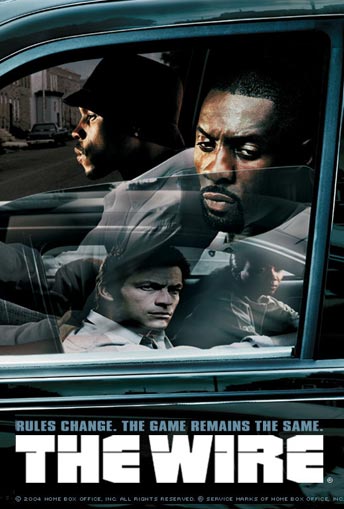 Five episodes written by Richard Price: S03E02, “All Due Respect;” S03E08, “Moral Midgetry;” S04E03, “Home Rooms;” S04E08, “Corner Boys;” S05E07, “Took”
One of the great things about the HBO crime drama The Wire is that delving into the details of its creation can lead you to an infinite array of similarly fascinating works and stories: You’ll find yourself reading creator David Simon’s non-fiction books for the anecdotes he ended up re-using on the show, or watching Spike Lee’s 25th Hour for the origins of Isiah Whitlock Jr.’s famous “Sheee-it” catchphrase, or even reading up on potential presidential contender Martin O’Malley for his parallels to fictional Baltimore politician Tommy Carcetti. It’s like the Star Wars expanded universe, except it’s all relevant to the world we live in rather than geekily alien and self-contained. And one of the most rewarding parts of this textual extended family is the work of Richard Price, who first caught my attention through his work on five Wire teleplays, beginning in the show’s third season.
(Note: I generally try to avoid spoilers on this blog but that’s going to be impossible in this post, so if you somehow haven’t yet seen The Wire, by all means go do that and then come back.) Continue reading
SAMARITAN (Novel, 2003)
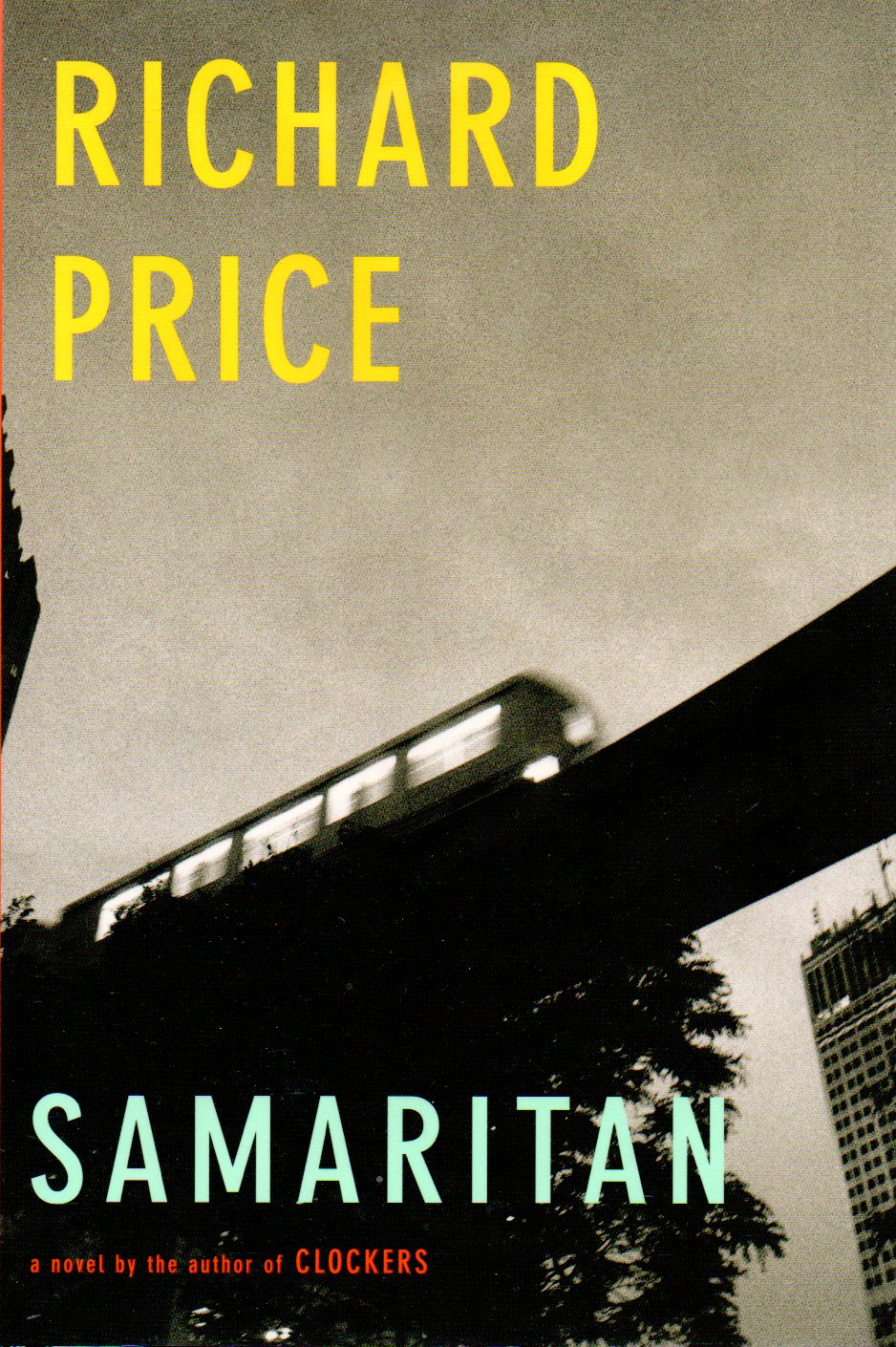 Back in my review of Richard Price’s 1978 novel Ladies’ Man I noted that his books can be divided into three phases–one focused on working-class teens coming of age in the Bronx (The Wanderers and Bloodbrothers), one consisting of first-person neurotic comedies (Ladies’ Man and The Breaks), and one based around inner-city crime and racial strife (Clockers and everything that followed). Samaritan is a bit of a hybrid, though: It’s a Phase 2 protagonist transplanted into a Phase 3 structure, with hints of Phase 1 floating around as backstory. And even better, the main character is a TV writer, a job which echoes Price’s real-life experience writing feature films (and eventually TV shows, though he hadn’t yet entered that medium at the time of this book’s publication). If you had to pick one work to sum up the themes and content of Richard Price’s career, Samaritan would be the way to go.
Best of all, that’s just the icing on the cake: Even if you have no familiarity with anything else Price has done, this is still an immensely satisfying novel in its own self-contained right. Continue reading
SHAFT (Film, 2000)
 Directed by John Singleton
Screenplay by Richard Price, John Singleton and Shane Salerno (from the story by John Singleton and Shane Salerno, adapted from the novel by Ernest Tidyman)
One aspect of Richard Price’s career that I haven’t talked about much in this blog so far is his script doctoring. In addition to the many films he’s credited on in an official capacity, he’s also worked without any onscreen credit to consult on and punch up the screenplays for movies like Basquiat and American Gangster. I haven’t given such movies their own entries here partly because I don’t usually know how extensive Price’s contributions to them were and partly because I don’t have any complete list of them. (I’ve included the ones I do know of in my “Odds and Ends” post, though.)
I bring this up in relation to the 2000 remake of Shaft because if Price had had his way, this film would’ve been one such uncredited gig; he regarded it as a script doctoring assignment and tried unsuccessfully to have his name taken off of it. The movie’s production was notoriously contentious: Star Samuel L. Jackson clashed with director John Singleton (Boyz n the Hood), but the two also united against producer Scott Rudin’s insistence that they stick to Price’s version of the script, with Jackson even being quoted as saying “I refused to say that white man’s lines” (a surprisingly harsh rebuke from someone who had worked on other Price projects in the past and who would go on to star in another, 2006’s Freedomland, in the future). So Price’s desire to be dissociated with this film is understandable, but it’s also ironic, because while this obviously isn’t the most novelistic or nuanced project he’s worked on, his influence on it is clearly apparent in a variety of ways. Continue reading
FREEDOMLAND (Novel, 1998)
 Freedomland, Richard Price’s 1998 novel of racial strife packaged as a kidnapping mystery-thriller, seems destined to age into the reputation of being “just as relevant now as it was the day it was published.” When it first came out it was critiqued as a commentary on the racially charged cultural firestorms of the preceding decade, one of which in particular provided the initial inspiration for the book’s story. (Saying which one would kind of constitute a spoiler, but click here and go down to the third paragraph if you’re interested.) Today you could just as easily view it in the context of the “Black Lives Matter” protests–though if I were writing this blog last year, the obvious point of reference would’ve been Trayvon Martin and the George Zimmerman trial. Presumably by next year the book’s themes may have been echoed in yet another tragedy. Freedomland attempts to examine the self-perpetuating cycle through which America fears and abuses its poor black citizens, and in that regard it’s sadly unlikely to start feeling dated anytime soon. Continue reading
RANSOM (Film, 1996)
 Directed by Ron Howard
Screenplay by Richard Price and Alexander Ignon, based on the 1956 screenplay by Cyril Hume and Richard Maibaum
At first glance, 1996’s Ransom might seem like a standard Hollywood star vehicle, a predictable action flick featuring several variations of its chiseled leading man bellowing “GIVE ME BACK MY SON!” And it is that, but, like many Richard Price films from the ’90s, it’s also smarter and more well-executed than its underlying structure would seem to have required. Continue reading
CLOCKERS (Film, 1995)
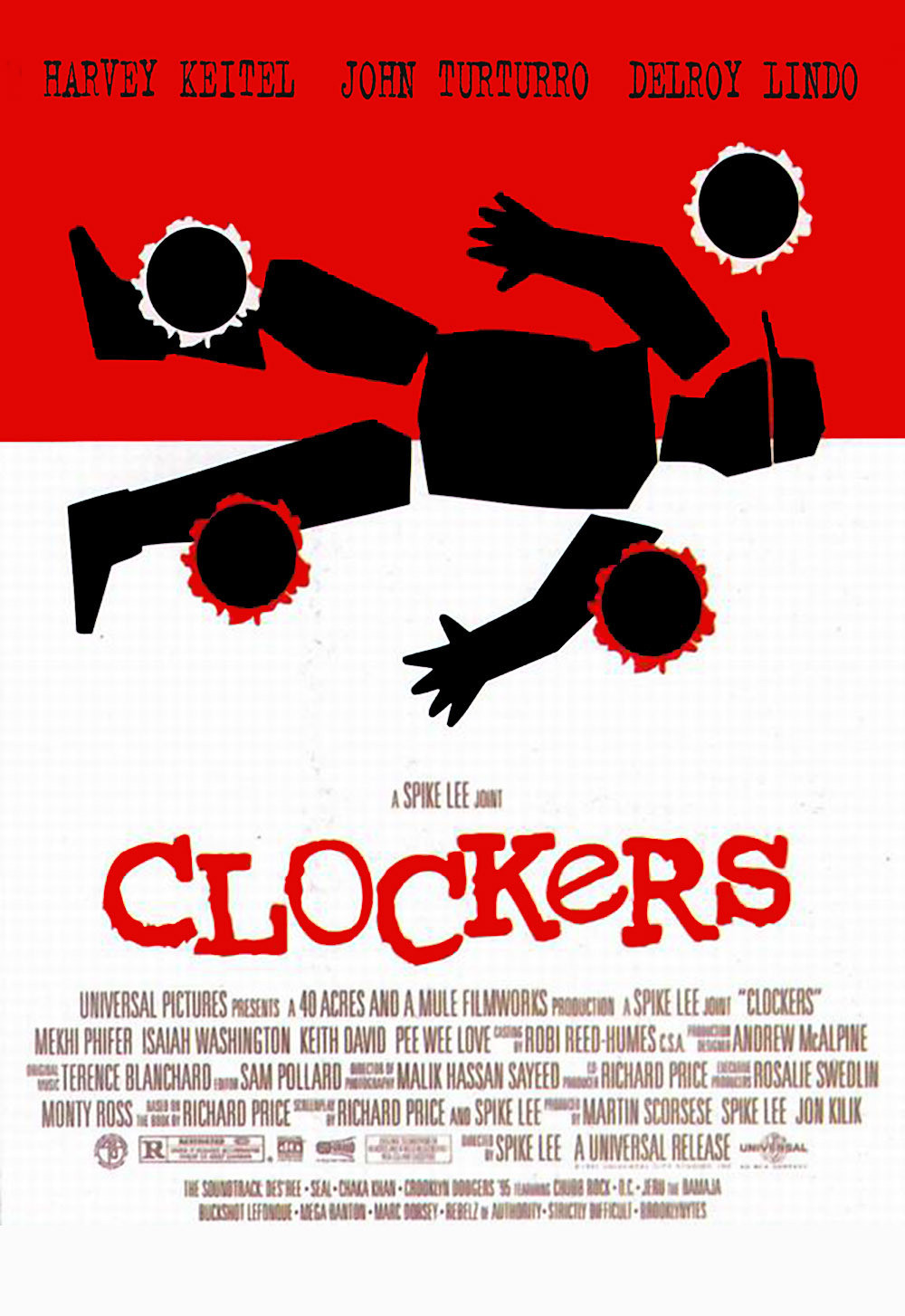 Directed by Spike Lee
Screenplay by Richard Price and Spike Lee, adapted from the novel by Richard Price
I’m going to have to advise you not to trust my opinion on this movie. I don’t like it very much, but a lot of people seem to feel differently: Critics generally praised it, and a scan of Netflix and YouTube comments reveals a lot of affection for it among casual viewers. And that’s not surprising, as the whole project looks great on paper: The book was great, the book’s author co-wrote the screenplay, and Spike Lee would be on anyone’s short list of dream directors for the material (alongside Martin Scorsese, who was originally attached to direct and ended up serving as a producer). So I have to admit that it’s entirely possible I’m just being an obnoxious fanboy, turning up my nose at a valid adaptation and whining that “the book was better.” Continue reading
KISS OF DEATH (Film, 1995)
 Directed by Barbet Schroeder
Screenplay by Richard Price, adapted from the original 1947 screenplay by Ben Hecht and Charles Lederer; story by Eleazar Lipsky
Kiss of Death, based on the renowned 1947 film noir of the same name, marks the point at which Hollywood started to get lazy in its use of Richard Price: This, the industry seems to have decided, is the guy who writes remakes of old crime movies. So while Sea of Love and Mad Dog and Glory used some elements of film noir storytelling to deliver original stories that addressed themes Price was interested in, Kiss of Death (which follows in the footsteps of the Night and the City remake) feels more like the for-hire job it is, with little evidence that Price ever held it particularly close to his heart.
But it’s still well-done and enjoyable in its own right, even if it doesn’t provide many thematic dots for me to connect. Continue reading
MAD DOG AND GLORY (Film, 1993)
 Directed by John McNaughton
Screenplay by Richard Price
“I was a prolific screenwriter in the late ’80s and early ’90s,” Richard Price says in this Washington Post profile from 2006. “Hollywood had room for the $25 million movie then. And the movie could be about darker, edgier subjects. It could be about subjects that might not pack ’em in at the movie houses in Iowa.”
Mad Dog and Glory is a good example of the kind of film Price is talking about, and it’s a great demonstration of what a loss it is that that kind of film isn’t getting made so much anymore. It’s not “dark” or “edgy” in the sense of, say, Nymphomaniac, but it’s a movie for adults, funny without shying away from the harsher implications of its plot, well-executed without being stylistically flashy. And it’s got Bill Murray playing a mobster who does stand-up comedy. What more could you ask for? Continue reading
 Priced Out